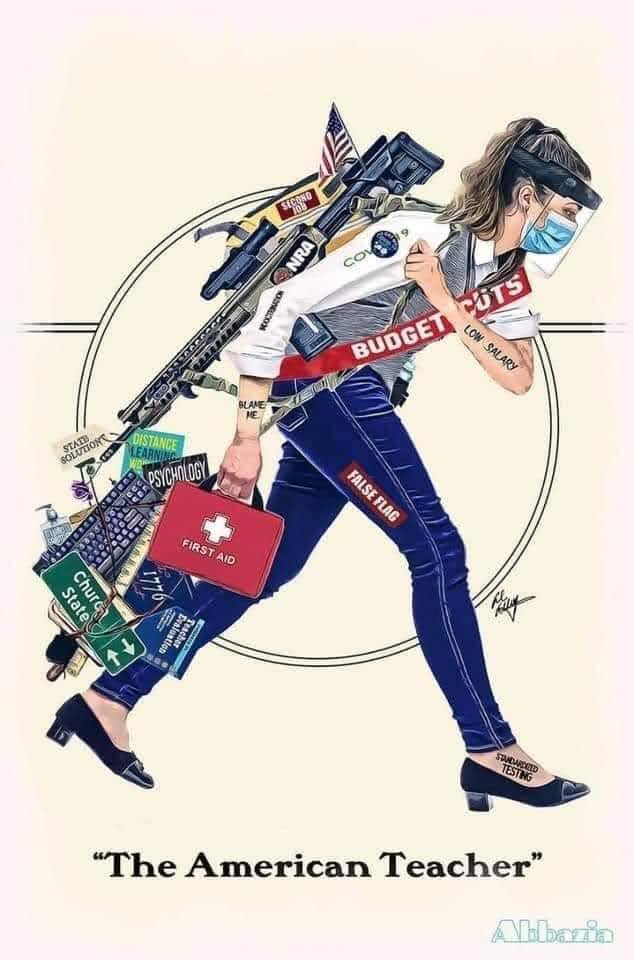
Until you walk in a public school teacher’s shoes…
Timothy James Walz is an American politician, former schoolteacher, and retired U.S. Army non-commissioned officer who has served as the 41st governor of Minnesota since 2019. He is the Democratic Party’s nominee for vice president in the 2024 United States presidential election…
What representation will our precious children have….A teacher’s voice will be heard…
I am truly holding onto Hope for our precious children’s right to a strong public school education..
We were blessed having our First Lady, Dr. Jill Biden … being that of a college professor… advocating for our precious children….
But, now a vice president being a former highschool public school teacher/ coach…
We must regard our teachers and all school personnel with dignity and respect they so deserve…
#FloridaTeacher❤️🍎 Our precious children are ready!! May G-d Bless …🙏🏽💙
Leslie Postal, Orlando Sentinel staff portrait in Orlando, Fla… PUBLISHED: July 5, 2024 at 5:22 p.m. | UPDATED: July 6, 2024 at 11:31 a.m.
Florida governor Ron DeSantis delivers remarks in Umatilla, Fla.,Tuesday, June 25, 2024, during a visit to tout the state’s infrastructure grants program. (Joe Burbank/Orlando Sentinel)
Our schools are in crisis 2024…All the divisiveness created by this DeSantis government, affecting our children and schools causing many of the critical issues; teacher shortages …Book bans that restrict learning and curriculum issues where our children can not learn our history ….Gun and safety issues…etc..
The directive appears similar to requirements the state imposed on math and social studies textbooks said to include “critical race theory” and “social justice” material…
Textbook authors were told last month that some references to “climate change” must be removed from science books before they could be accepted for use in Florida’s public schools, according to two of those authors.
A high school biology book also had to add citations to back up statements that “human activity” caused climate change and cut a “political statement” urging governments to take action to stop climate change, said Ken Miller, the co-author of that textbook and a professor emeritus of biology at Brown University.
Both Miller and a second author who asked not to be identified told the Orlando Sentinel they learned of the state-directed changes from their publishers, who received phone calls in June from state officials.
Miller, also president of the board of the National Center for Science Education, said the phrase “climate change” was not removed from his high school biology text, which he assumed happened because climate change is mentioned in Florida’s academic standards for biology courses.
But according to his publisher, a 90-page section on climate change was removed from its high school chemistry textbook and the phrase was removed from middle school science books, he said.
The other author said he was told Florida wanted publishers to remove “extraneous information” not listed in state standards. “They asked to take out phrases such as climate change,” he added.
The actions seemed to echo Florida’s previous rejection of math and social studies textbooks that state officials claimed include passages of “indoctrination” and “ideological rhetoric.” And they fall in line with the views of many GOP leaders, who question both the existence of climate change and the contributions of human activities to the problem, despite a broad scientific consensus that human-caused climate change is transforming the earth’s environment.
In May, Gov. Ron DeSantis signed a bill that stripped the phrase “climate change” from much of Florida law, reversing 16 years of state policy and, critics said, undermining Florida’s support of renewable and clean energy…
The bill did not address public education nor the state’s science standards, which were adopted in 2008 and spell out what students should learn in science instruction from kindergarten through 12th grade. But SB 1645 altered Florida’s energy policy, removing the goal of recognizing and addressing “the potential of global climate change,” Senate staff wrote in an analysis of the bill.
DeSantis has said the new legislation, passed by Florida’s Republican-dominated Legislature, was “restoring sanity in our approach to energy and rejecting the agenda of the radical green zealots.”
The Florida Department of Education did not initially respond this week to a request for comment about the science books, nor did it respond to earlier questions in May and June about when the approved list of science textbooks for elementary, middle and high school science classes would be released. Florida’s school districts use the list to purchase books for their schools and had been told the state would release the science list in April.
Late Tuesday, the department posted the list on its website.
And after this story posted online Friday evening, an education department spokeswoman emailed a statement to the Sentinel. It did not directly address questions about science textbooks and climate change, instead saying Florida has “some of the most rigorous educational standards in the nation” and textbooks and other instructional materials to be used in classrooms must meet them. “Florida works with publishers to ensure that their product aligns with our standards and does not include any form of ideology or indoctrination,” it said.
Miller’s and the other author’s books were among those on the approved list released Tuesday. The texts have not yet been printed so the Sentinel was unable to review them.
But there are no textbooks for high school environmental science classes on the approved list, though three companies submitted bids to supply books for that class, according to documents on the department’s website. Course material for that subject typically includes significant discussion of climate change.
“How do you write an environmental science book to appease people who are opposed to climate change?” asked a school district science supervisor, who is involved in science textbook adoption for her district. She asked not to be identified for fear of job repercussions.
She and other educators, the textbook authors and science advocates said the state’s actions will rob students of a deeper understanding of global warming even as it impacts their state and communities through longer and hotter heat waves, more ferocious storms and sea level rise.
Florida had already earned a D — and was among the five lowest-ranked states in the country — in a 2020 study that graded the states on how their public school science standards addressed climate change, said Glenn Branch, deputy director of the center for science education, which was a partner in the study.
Excising the phrase from science textbooks will “make Florida climate education even worse than it is,” Branch said. “These ill-considered actions are going to cheat Florida students.”
Branch said it was especially troubling the decision seemed based on “ideological grounds” and ignored the “rock solid” science that has documented climate change and its impacts.
Brandon Haught teaches environmental science at a Volusia County high school and was active in efforts to include evolution — another controversial science topic — in the standards adopted 16 years ago.
His ninth graders know almost nothing about climate change because it is not taught in the lower grades, he said. He spends at least a week on the topic but is covering only “the basics,” he said.
Florida students need more information on the subject not less, he added. “Florida is one of the most impacted by the impacts of climate change, and oh my goodness Gov DeSantis, why?”
The state’s push to get publishers to remove “climate change” from some science books seems similar to its actions in 2022 and 2023 when it rejected some math and social studies textbooks publishers wanted to sell in Florida.
In those cases, the department announced it had rejected textbooks in press releases that claimed the books contained “critical race theory” and “social justice” topics, which were prohibited by state laws and rules. Some of those textbooks were later approved after the publishers made changes.
In contrast, the list of approved science books was posted to the department’s website without an accompanying press release. Judging from past practice, science textbooks that were rejected, such as those for environmental science, could later be approved if they were altered to meet Florida’s requirements.
Some school districts, including those in Orange and Seminole counties, were poised to buy new science books as soon as the state list was released. But districts can continue to use older books for a while, and some districts now may not purchase new science books immediately because the list was released months later than expected.
There were 146 textbooks submitted for consideration. About 75 books from a total of about 10 publishers were approved for middle and high school classes, with four publishers also approved to provide science books for kindergarten-to-fifth-grade classes, according to documents on the department’s website.
Textbooks can be rejected for failing to match Florida’s standards or failing to provide content that is accurate, among many other issues.
Science textbook publishers were told in advance to keep “critical race theory,” “social emotional learning” and other “unsolicited strategies” out of their textbooks. However, the “rubric” used to evaluate the books made no mention of “climate change.”
The Sentinel could not reach for comment the three publishers — Cengage Learning, McGraw Hill and Savvas Learning Company — that submitted environmental science books that did not make the approved list posted Tuesday.
I can so remember the day… I heard the news …I was then teaching and nothing was ever going to be the same…We have had more emergency drills… Locking doors, lights out …
And a resistance in gun reform…
Let’s arm Teachers…
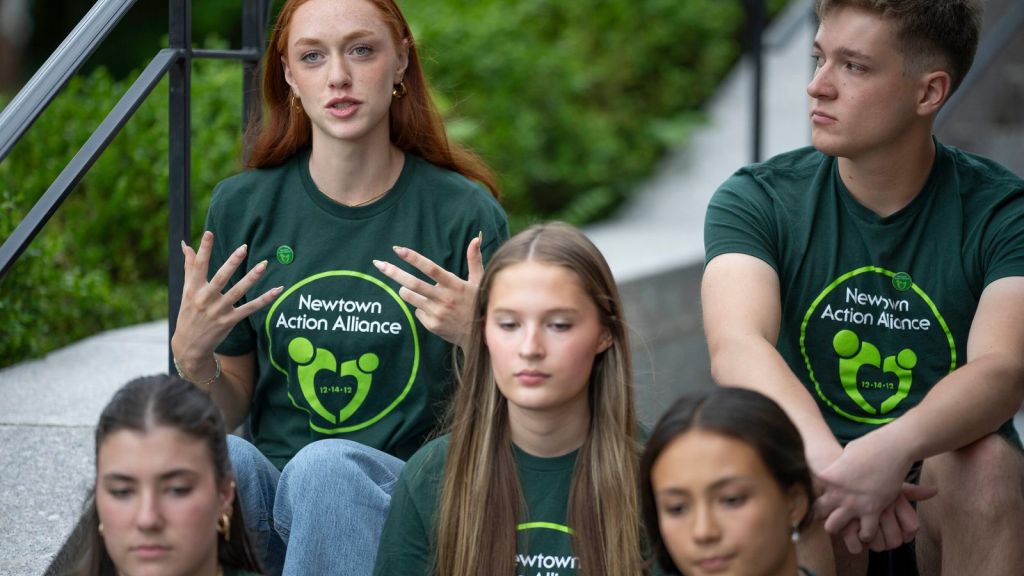
Sandy Hook shooting survivors have graduated high school without 20 of their classmates
Members of Newtown High School’s class of 2024 will leave with the same mix of bittersweet feelings and excitement as many of their peers do when graduating high school in the US.
However, 60 of the 300-plus cohort of kids in Newtown, Connecticut, who graduated on Wednesday will also carry the burden from surviving one of the deadliest school shootings in US history.
They walked across the stage, knowing 20 of their classmates would not be able to join them.
On 14 December 2012, Adam Lanza shot his mum, took her guns and drove to the nearby school with them.
There he murdered 20 children, all in the first grade – aged six or seven, and six adults, including four teachers and the principal.
As police arrived at the school, Lanza then killed himself.
Prominent conspiracy theorist Alex Jones was ordered to pay almost a billion dollars to victims of the shooting and their families after he claimed the Sandy Hook shooting was a hoax that had been staged by gun control activists using actors.
More than a decade on from the massacre, the survivors of the attack celebrated their graduation, with victims honoured during the ceremony with a moment of silence.
The school’s principal Kimberly Longobucco read out the names of the young kids who were killed as the class of 2024 looked on, wearing green-and-white ribbons in remembrance of the victims.
She said: “We remember your 20 classmates who were tragically lost on December 14, 2012, who will not walk across the stage tonight.
“We remember them for their bravery, their kindness and their spirit.
“Let us strive to honour them today and every day.”
Five of the survivors discussed their feelings about graduating before they walked across the stage.
They had all been active in Junior Newtown Action Alliance and its anti-gun violence efforts – with the national conversation around gun control reignited following the attack.
Emma Ehrens was one of 11 children from Classroom 10 to survive the attack.
She and other students were able to flee when the gunman paused to reload and another student, Jesse Lewis, yelled for everyone to run.
Jesse was one of five kids killed in the room, along with two teachers.
Ms Ehrens said: “I am definitely going be feeling a lot of mixed emotions. I’m super excited to be, like, done with high school and moving on to the next chapter of my life.
“But I’m also so… mournful, I guess, to have to be walking across that stage alone … I like to think that they’ll be there with us and walking across that stage with us.”
But she added she was looking forward to the opportunities that came with moving on, and no longer being “the Sandy Hook kid”.
Grace Fisher was in a classroom down the hall from the killings and said that despite efforts to have a normal childhood following the massacre, “it wasn’t totally normal”.
She added they were missing “such a big chunk of our class” for their graduation.
Many of the survivors of the shooting have said they continue to live with the trauma of the day…
Matt Holden, 17, said: “In Sandy Hook, what happened is always kind of looming over us.”
A number of the survivors said that their experience with the attack has informed their plans going forward, and into college.
Ella Seaver said she is going to study psychology and become a therapist as a way of giving back.
Ms Seaver said: “It’s a way to feel like you’re doing something. Because we are. We’re fighting for change and we’re really not going to stop until we get it.”
Others, like Ms Ehrens and Mr Holden, want to work in politics to effect policy and laws….
Here we are once again …I am now, nine years retired, and we our still dealing with such political divisiveness…
Children are always the pawns struggling within this division ...
Summer 2023…A Time For Reflection
Back when I was getting ready for retirement… summer of 2014, Florida was heading in crisis… Reflecting back then….
My first thought, this year especially, is acknowledging how exhausted I am; All the extra demands of testing and keeping up the pace of a more challenging curriculum…While striving to keep the children motivated and engaged…
I do also worry how my children spend their summer’s free time…
Throughout the school year, I spent my teaching time encouraging them the “love of reading”; encouraging parents to take their child to the public library…And now with this extra time, I so do hope my parents “if” they have the time in their challenging lives… to take their child to the public library… to become the owner of their personal library card, that will open up their “World” to all the joys of the Public Library; Summer Programs..Movies…Reading Books…And free Computer time!
There’s definitely a loss of our precious children’s innocence…
…
Summer of 2024
How these last nine years have definitely manifested into that crisis…Due to the authoritarian government lead by our governor, Ron DeSantis…
Teacher shortages due to lack of pay and authoritarian policies Book Bans Lack of inclusion Funding our public schools…with critical mental health and free meal resources… Gun safety reform…
Florida students and teachers will no longer have to “declare” their pronouns in school or be forced to use pronouns not based on biological sex.
There is definitely a loss of innocence… Because: Your Divisive Political Policies Teacher shortages Book Bans Lack of inclusion Funding our public schools…with critical mental health and free meal resources… Gun safety reform… https://t.co/t1JY639J6t
"I showed it because of its earth elements…It shows how the Earth really is alive. It has a heart in this movie."
— Jenna Barbee, a Florida teacher under investigation for showing Disney's 'Strange World' with a biracial, gay character, defends her choice to show the PG film pic.twitter.com/U7XIZfkqpx
And this is what our Florida’s teachers are up against…
This summer must be that time for reflection…And begin this critical moment for change…Our public schools must be strong and vital…To survive and thrive!!
I am extremely concerned and frustrated about this article… Extremely misleading…
Reality…having taught here…Now retired…
Teachers and schools are not able to be as affective as they must be … These are extremely divisive times, and our precious children are paying for all the controversy…
Moreover lack of funding necessary programs…book bans, teacher shortages, gun reform definitely are not reflected in the data …
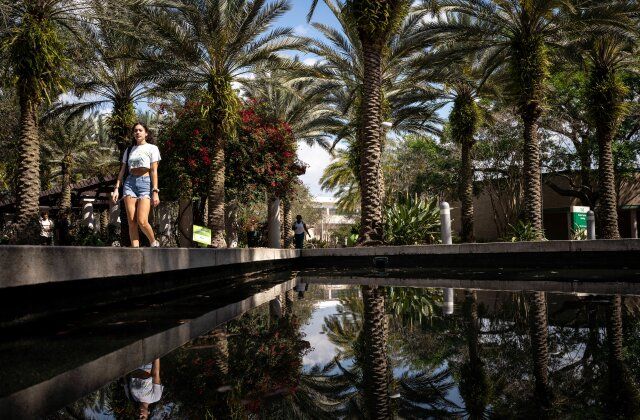
THOMAS SIMONETTI|WASHINGTON POST|GETTY IMAGES
A young woman walks on the University of South Florida campus in Tampa, Florida. For the second year in a row, Florida is the top state for education in U.S. News & World Report’s Best States rankings…
Gov. Ron DeSantis and his state are no stranger to controversy in the areas of education and the economy. But this is what the data shows…
By Tim Smart May 7, 2024 |
The debate around education in Florida is among the most contentious in America.
The state’s Republican governor, Ron DeSantis, has staked his political persona on being an opponent of what he terms the “woke” influence on education policy, even centering his 2024 presidential campaign on the theory that his efforts in the Sunshine State would entice a national audience to vote him into the White House.
Unfortunately for DeSantis, making America Florida did not resonate with Republican voters in states like Iowa and New Hampshire, and he exited the race after running a distant second to former President Donald Trump in the Iowa caucuses.
Statistically, though, Florida still fares well in many education metrics, and for the second year in a row is the top state for education in U.S. News & World Report’s Best States rankings. That placement is largely fueled by several stellar metrics in higher education, and less so by Florida’s still fairly strong performance in the prekindergarten- through-12th-grade arena.
Florida’s Education Success…
In higher education, Florida – which is No. 9 in the overall Best States rankings – posted the second-highest rates of timely graduation among students at public institutions pursuing two- and four-year degrees, respectively. Students attending its public, four-year institutions also faced the lowest average amount in the country for in-state tuition and fees. The state fell in the middle of the pack on two other measures of higher education: the average amount of federal student loan debt held by young adults and the share of those 25 and older in the state with at least an associate degree.
In metrics reflecting pre-K through high school, Florida excelled the most in college readiness – an assessment of the share of 12th-graders who scored highly on the SAT, ACT or both. It was No. 12 for preschool enrollment in the U.S., was tied alongside Illinois with a No. 19 ranking for high school graduation rate, and was No. 21 and No. 32 for eighth-grade reading and math scores, respectively…
“Florida is the No. 1 state in the country for education,” DeSantis said in a mid-April statement upon signing legislation designed to make it easier for underperforming schools to become charter schools, among other things. “By focusing on core academic subjects and rejecting indoctrination in the classroom, we have become a standard-bearer for educational excellence. The legislation I signed today continues to build on Florida’s previous accomplishments.”
Notably, the measure DeSantis signed in April also limited the ability of people whose children are not in a particular school district to object to books used in that district – essentially refining prior legislation signed by DeSantis that’s reportedly fueled a rash of book removals or restrictions in schools.
That and efforts like a DeSantis-backed law nicknamed “Don’t Say Gay” by detractors have helped fuel the firestorm of debate and criticism around education in Florida. The governor also has sought to influence the election of county school board members, limit the kinds of courses that can be taught in the state’s universities, tighten tenure oversight for professors and change the governing board of the New College of Florida, a liberal arts school with a progressive reputation.
The education metrics used by U.S. News to rank the states tend to focus on aspects of affordability, accessibility and achievement, and the controversial moves DeSantis has made so far may not be reflected there. The data used also can lag behind more recent developments due to when it’s released by a source and to the time needed for analysis. Many education metrics are tied to the year 2022, for example, and policy shifts may take time to play out.
Still, critics contend DeSantis’ moves could have lasting effects…
The effects may or may not show up in our traditional metrics, but I do think there are consequences to what he is doing,” says Jon Valant, a senior fellow in governance studies at the Brookings Institution and director of the Brown Center on Education Policy. “Florida is for many students as harsh an environment as we have“ anywhere.”
Separate from the U.S. News analysis, the most recent data on teacher pay from the National Education Association shows Florida moved down from 48th in teacher pay to 50th among the states, notes Florida Education Association President Andrew Spar, a frequent DeSantis critic.
“In K-12, there is a lot of data out there that shows Florida performs no better than it did 20 years ago,” Spar says, adding that the state was 36th in teacher pay in 2010. That was before two Republican governors – Rick Scott and DeSantis – launched what Spar calls “an all-out assault on public education.”
“When I look at all the factors, I really can’t see Florida leading on education,” Spar says.
Doc on school shooter’s parents reveals how prosecutors built case – ABC News
By Doc Louallen April 20, 2024, 6:10 AM
On Nov. 30, 2021, a 15-year-old boy killed four students and injured seven others in a shooting spree at Oxford High School in Michigan. He pleaded guilty to all 24 charges against him and was sentenced to life in prison.
Just three days after the shooting, Oakland County prosecutor Karen McDonald made the historic decision to charge the shooter’s parents, Jennifer and James Crumbley, with involuntary manslaughter. The Crumbleys are the first parents ever to be charged, then convicted, in the United States for a mass shooting committed by their child.
In a new hourlong documentary premiering April 18 on Hulu, “Sins of the Parents: The Crumbley Trials,” ABC News Studios offers exclusive behind-the-scenes access as the prosecution builds their case over a two-year period.
In this Feb. 8, 2022, file photo, Jennifer Crumbley, left, and James Crumbley, right, the parents of Ethan Crumbley, a teenager accused of killing four students in a shooting at Oxford High School in Oxford, Mich., appear in court for a preliminary examination on involuntary manslaughter charges in Rochester Hills, Mich. Paul Sancya/AP, FILE
“I know we have a legal duty as parents to protect other people from dangerous kids,” McDonald says in the documentary.
“This is about parents who largely ignored their son, neglected…his cries for help. And then bought him a gun,” said chief assistant prosecutor David Williams.
The shooter’s journal entries revealed that he blamed his parents for his mental decline, stating that they didn’t listen or get him a therapist. During the trials, evidence showed how the Crumbleys were engaged with their son’s interest in guns.
While investigating Ethan’s parents, McDonald and her team uncovered a text message sent by Jennifer Crumbley to her son. The text read, “LOL, I’m not mad. You have to learn how not to get caught.” Jennifer Crumbley did not appear to be angry with him after learning that he had been researching bullets in class.
Testifying in her own defense, Jennifer Crumbley said, “You know, as a parent, you spend your whole life trying to protect your child from other dangers. You never would think you have to protect your child from harming somebody else.”
James Crumbley’s defense attorney, Mariell Lehman, warned that the prosecution’s argument could set a dangerous precedent, blurring the line between parent and criminal.
“I think that if somebody is made out to be a bad parent, then…their behavior can be contorted into criminal behavior,” Lehman says. “I think that James Crumbley was…made out to be someone that he’s not.”
A jailhouse phone call with James Crumbley is one of several which the prosecution has said were threatening against the Oakland County prosecutor.
“When I get out of here, I am f—— on a rampage, Karen. Yes, Karen McDonald, your a– is going down and you better be f—— scared.”
Crumbley’s defense attorney characterized those remarks as venting, noting that some statements were from years before the trial began.
The Crumbleys were convicted of involuntary manslaughter and sentenced to 10-15 years in prison.
After the trial, Judge Cheryl Matthews said the Crumbleys showed a lack of concern toward guns and glorified their possession and use.
Second-grade teacher Barbara Zimmer goes over phonics to her students at Bay Crest Elementary School on Thursday, Jan. 25, 2024, in Tampa. School districts across Florida are reassessing how many teachers they can afford after federal pandemic relief funds dry up. [ JEFFEREE WOO | Times
#FloridaTeacher🍎 Retiring in 2015… 38 years teacher in Alachua Co. Starting in Palatka Putnam Co.1972… traveling 90 miles a day just to teach… We had a surplus of teachers and HOPE… My Heart Breaks for our Teachers… Children …
We must vote… #TakeBackFL #BidenHarris4More 🌊🌀💙📚🇺🇲
Thoughts About Children Easter Blessings… Our Precious Children 🐰
Easter Season is an amazing opportunity for our renewal, in starting over…
Especially, this being a Presidential voting year…
We truly can focus on our precious children, and vote to reelect President Joe Biden and Kamala Harris Vice President... Their advocacy and strides in making policy...that benefit the lives and future of our precious children...
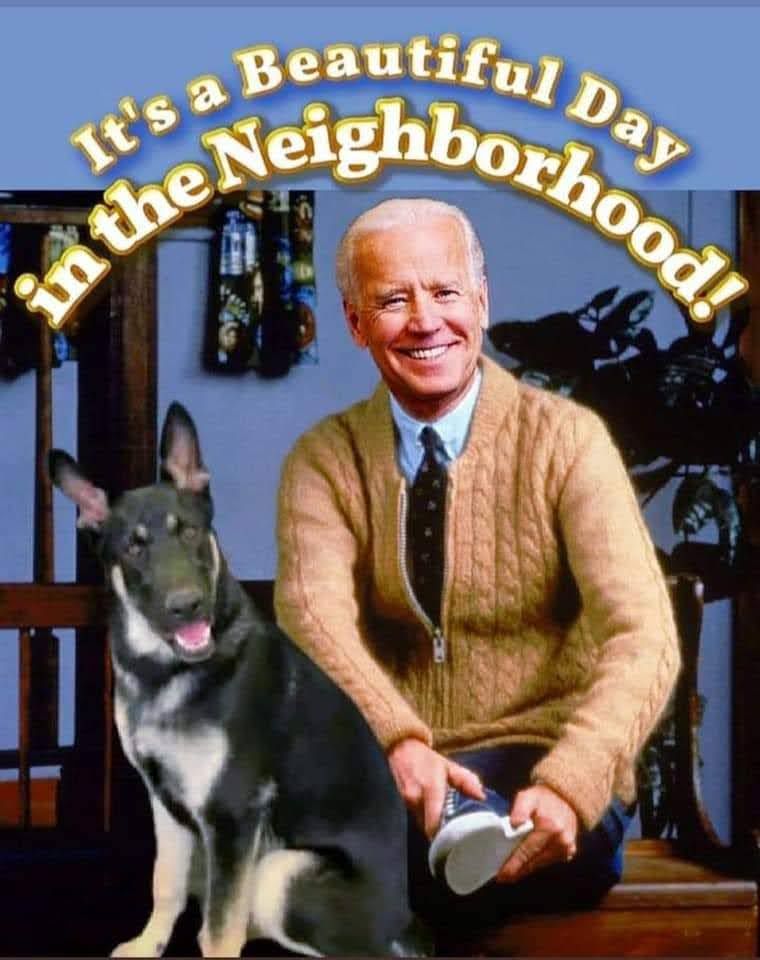
It’s a Beautiful Day in the Neighborhood! #BidenHarris4more
I so believe in giving President Biden and Kamala Harris another four years to continue their work in providing a better opportunity for a better future, for our precious children…
We will be in a stronger place… These are such challenging of times…And their wise, empathetic leadership is what we so need…
#FloridaTeacher🍎 Thank you so for your leadership… So grateful that President Biden is giving us another 4 years to get us through these challenging times..









 Janis Sexton...Teacher...Advocate